
Business idea
A product-information index
Your documentation index gives a scattered category one clearly named place to begin.
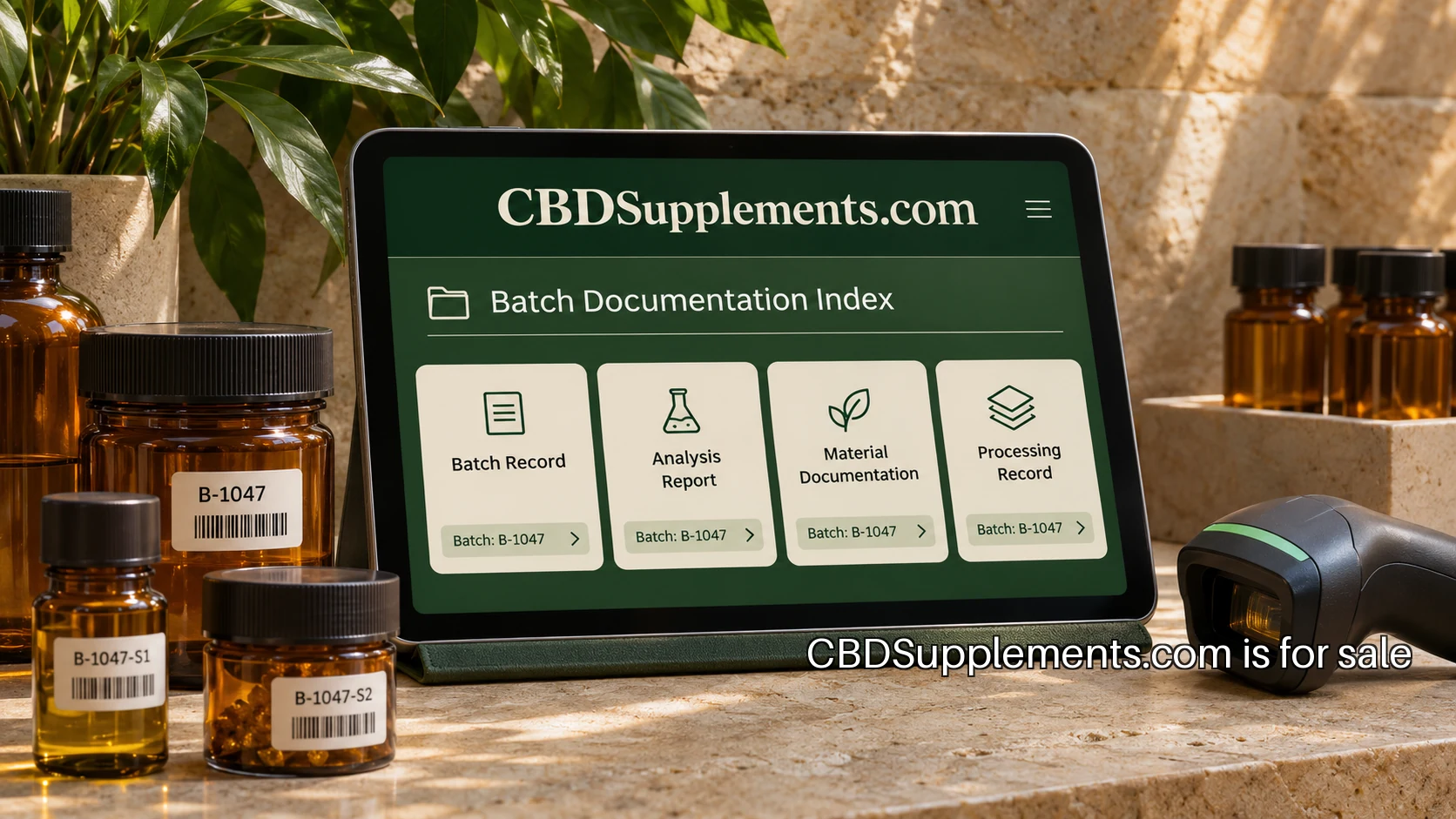
Product documentation often lives in several places at once: a manufacturer's page, a downloadable report, a QR-code destination and an older file still indexed by search. A documentation index could help professional readers track those relationships. On CBDSupplements.com, a founder could build a clearly named destination around a narrow question: which public document describes which product, batch and date?
This illustrative concept is an information service, with no product sales or endorsements. Its first customers might be editors checking references, procurement researchers assembling documentation or analysts studying public disclosure practices. Each has a reason to care about provenance. The service would show what a document says and where it came from, while leaving medical and legal judgments to appropriately qualified professionals.
Design the identifiers first
Start with ten public records and a spreadsheet. Give every product its own internal identifier, then give every document a separate identifier. A product can have several versions of a report, and one manufacturer can publish documents for many batches. Treating the PDF as the product record will create confusion as soon as an older version needs to remain accessible.
Useful fields include the exact product name shown, manufacturer, document title, public source URL, retrieval date, batch or lot identifier, report date and issuing laboratory when present. Preserve spelling and units from the source. A separate normalized field can support searching, but the original text should remain available for comparison. A blank field means the index did not find that information in the reviewed document.
A laboratory report belongs to the sample and scope it describes. California's Department of Cannabis Control testing overview illustrates how one jurisdiction describes COA reporting for its regulated cannabis market. An index should identify that context rather than treating one jurisdiction's requirements as a universal checklist for every CBD-related product.
Keep the source trail visible
Every entry needs a link to the original public document and a checked date. If the publisher permits an archived copy, record when it was captured and retain its checksum internally. If permission is unclear, preserve the metadata and original link while seeking advice about storage. The interface can still explain that the document was reachable on a particular date without republishing its entire contents.
A changed file at the same URL deserves attention. Compare document identifiers and report dates before assuming the new file replaces the old one. It might describe another batch. A change log should say what the editor observed: a source link moved, a new batch report appeared or a previous file became unavailable. Those are useful facts a professional reader can follow back to the source.
Compare fields without creating a ranking
A table can show whether records contain a batch identifier, an issuing laboratory and a report date. It should not turn missing fields into a numerical product score. Documentation completeness and product suitability are different questions. A field-based comparison helps a reader find the next document to inspect without implying that the index has tested a product or endorsed its use.
Units require particular care. A number displayed as a percentage cannot be placed beside a mass-per-unit result as if they were the same measurement. Preserve the units and matrix described by the report. If the team offers conversions later, they need a documented method, qualified review and clear handling of uncertainty. The first version can simply keep unlike results in separate columns.
Build for questions from professional users
Ask prospective users to bring a real documentation task to a prototype session. Can they locate the record for a named batch? Can they tell when the source was checked? Can they distinguish a manufacturer statement from a laboratory result? Ask what they would do next with the information. The answer may reveal that a clean export is more valuable than a complicated dashboard.
The first paid offering might be a monitored watchlist that alerts a team when a public document changes. Another possibility is a team workspace for collecting source records during an editorial review. Test one of these jobs with a handful of organizations before promising broad market coverage. A small set of reliably maintained records can support a more useful conversation than an unreviewed catalogue of thousands.
Set rules for commercial participation
Manufacturers should have a route to submit a public document or flag an incorrect identifier. That route should use the same verification process as material found by an editor. Paid placement cannot quietly change which document is presented as current. If sponsorship is introduced, label it and keep the records' inclusion criteria publicly available.
Measurement context also deserves a visible place in the service. The NIST laboratory quality-assurance program is a primary reference for understanding why analytical methods and comparison materials matter. An index can link to such context while keeping each product record tightly focused on its own documents.
Run the ten-record test
Choose ten public documentation sets, define the fields and have a second reviewer reproduce the entries from the original links. Log disagreements before writing software around the schema. Then show the prototype to prospective professional users and ask them to complete a document-matching task. CBDSupplements.com gives the founder a direct category identity for that service; the reviewed records give the first demonstration something useful to show.
A category name for your next publication
Discuss acquiring CBDSupplements.com or describe the partnership you have in mind.
Request pricing