
Business idea
A CBD evidence library
Your research library has a name that states its subject before the first article opens.
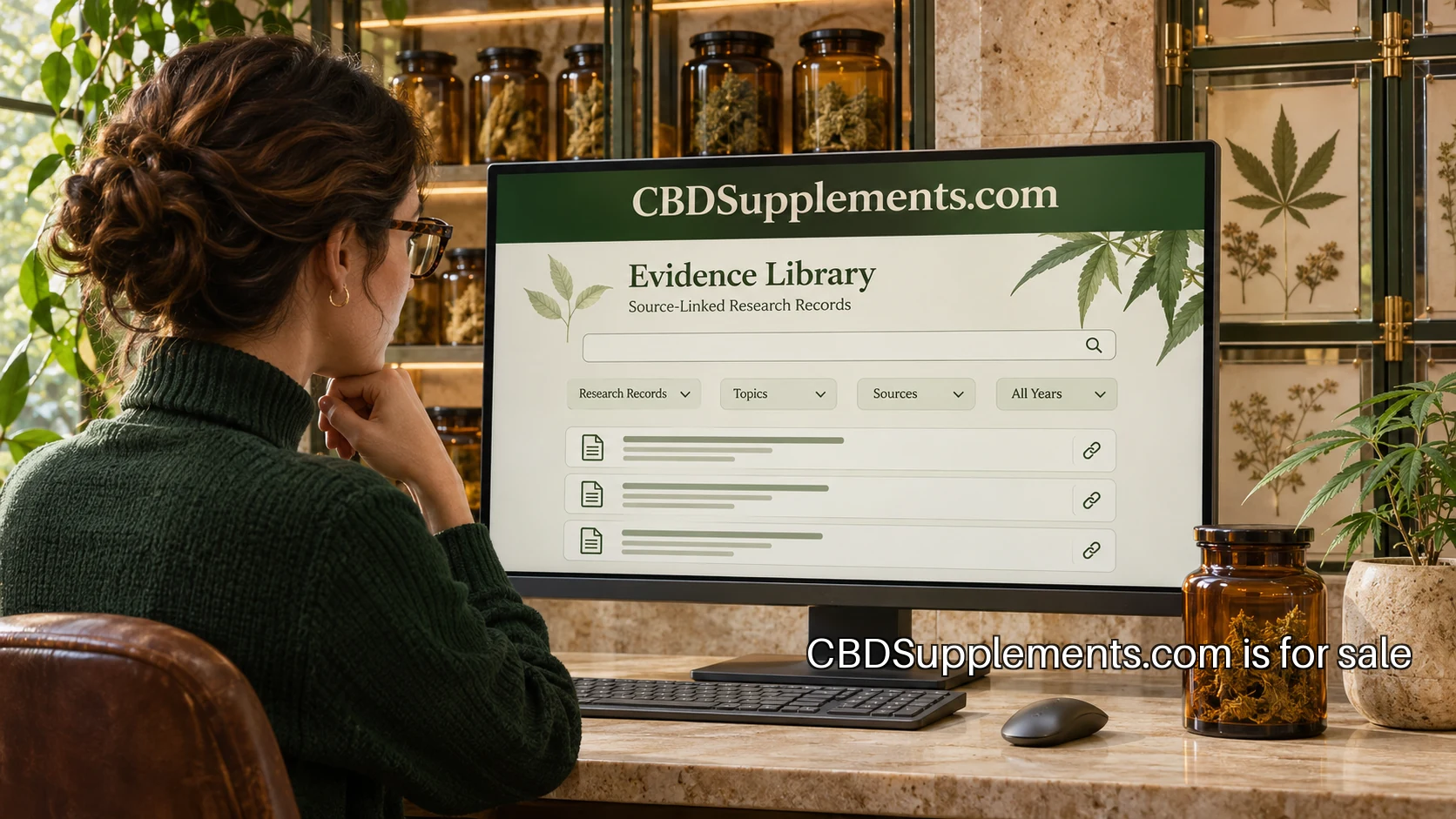
A useful research library starts with a reader trying to find a source again. They remember the question, perhaps the year and a few words from the title, but the original paper is buried under pages of summaries. A source-led library on CBDSupplements.com could organize that search around clear records rather than a stream of loosely related posts. The founder can introduce a category publication with a specific first job: making original material easier to locate and inspect.
This is an illustrative business concept for a future owner. It is intended for editors, researchers and professional readers who need a dependable research workflow. The product would organize information rather than recommend products or interpret findings for an individual's medical decisions. That distinction gives the first release a manageable scope and a defined editorial assignment.
Begin with the record, not the summary
I would prototype a single record before choosing a publishing platform. It needs the source title, author or issuing body, publication date, stable identifier, original URL, document type and a short description of the question addressed. Add the date an editor checked the record and a place for corrections. Those fields make the entry useful even before someone writes a polished summary.
A paper record should distinguish a primary study from a review, a trial registration and an official guidance document. The interface can let readers filter by type without ranking one record as a universal answer. A study's population, design and stated limitations belong beside its title when an editor has the expertise to extract them accurately. Missing information gets an explicit status rather than an improvised interpretation.
The NIH cannabidiol research overview is an example of an official starting point for finding research context. A library would still link each entry to its own original source. A broad overview and an individual experiment answer different questions, so the record should tell the reader which one they have opened.
Choose one collection to maintain
The first collection could cover document-reading methods and laboratory measurement research. Another option is a tightly defined set of published study designs, maintained by a qualified editor. Resist launching a dozen topic shelves with three records each. A small collection with consistent fields gives prospective readers something concrete to test and gives the team a realistic maintenance burden.
Write the inclusion rule before collecting records. For example, an initial shelf might include only publicly accessible official research documents and peer-reviewed papers with stable identifiers, within a specified date range. That is a product choice, not a claim that excluded material lacks value. It lets an editor explain the collection's boundary and apply it consistently when a new document arrives.
Make correction part of the product
A reader should be able to flag a broken link, a mistaken date or a summary that does not match the source. The correction form can ask for the record identifier, the disputed field and an original reference. Keep those reports separate from commercial inquiries. An editor reviews the evidence, updates the record and writes a short change note when the correction affects meaning.
Version history matters most when it is understandable. A timestamp alone tells readers very little. “Replaced the publisher URL after a site migration” is useful operational context. “Changed the study-design label after editorial review” is a different kind of correction and should remain visible. Neither requires exposing an editor's private notes or a reader's contact details.
Test the retrieval job
Give five prospective readers the same small set of tasks. Ask them to locate an original paper, identify its document type, find the last review date and report a discrepancy. Watch where they stop. If they cannot tell a review from an original study, adding more records will make the problem larger. Fix the labels and record structure before expanding the collection.
A useful pilot measure is task completion with the source open, not page views alone. The team could record how often a reader reaches the original document and whether the fields answer their immediate question. Interviews can uncover a second job, such as exporting a citation or saving a reading list. Those requests help shape the next release around actual research habits.
Find a sustainable editorial model
An institutional subscription could support saved collections, team annotations and export tools while public records remain accessible. A paid research briefing might summarize newly added documents for professional subscribers. Test the willingness to pay for a specific workflow before building billing or promising comprehensive coverage. The maintained record set is the work; the subscription should support a job readers already recognize.
Commercial relationships need a separate policy. A sponsor should not buy inclusion in a research shelf or influence a record's interpretation. The NIST cannabis laboratory quality program offers a useful example of primary measurement material that an editor could catalogue on its own merits. Source selection and financial support should remain visible as separate editorial decisions.
Publish a reviewed pilot
The next step is a source schema, twenty carefully checked records and a short public description of the collection's limits. Ask a qualified subject reviewer to inspect the fields and summaries before launch. Give the pilot a correction route and a realistic review schedule. With CBDSupplements.com on the cover, the founder can introduce a recognizable research library whose first promise is concrete: here is the original material, and here is how this collection is maintained.
A category name for your next publication
Discuss acquiring CBDSupplements.com or describe the partnership you have in mind.
Request pricing